How AV Manufacturers Can Improve Product Integration With Design Software

The AV industry has changed dramatically over the past decade. AV manufacturers no longer compete only on hardware specifications — they compete on how easily their products fit into real-world system designs. Integrators, consultants, and end users increasingly expect manufacturers to provide more than a spec sheet; they expect accurate compatibility data, ready-to-use design assets, and documentation that speeds up procurement and installation.
This is where AV software for manufacturers becomes essential. Modern AV design platforms allow manufacturers to embed their products directly into system schematics, rack layouts, and floor plans, ensuring that integrators can specify, visualize, and document products without friction. Tools that offer a free rack diagram software module make it even easier for manufacturers and their partners to test product placement, verify rack space requirements, and confirm compatibility before a single unit ships.
In this guide, we'll explore exactly how AV manufacturers can improve product integration using design software, the technical and business benefits involved, real-world use cases, and why platforms like XTEN-AV are becoming the standard for manufacturer-integrator collaboration.
Why Product Integration Matters More Than Ever for AV Manufacturers
AV projects today are complex ecosystems involving multiple vendors, control systems, networking layers, and signal paths. A single conference room might include displays from one manufacturer, DSPs from another, and control processors from a third. If a manufacturer's product isn't easy to visualize within this ecosystem, integrators may default to more "design-friendly" competitors — even if the specs are inferior.
This shift in buyer behavior means manufacturers must think beyond catalogs and technical PDFs. They need AV design software that turns static product data into interactive, usable design components that integrators can drop directly into their projects.
The Core Challenge: Disconnected Product Data and Design Workflows
Historically, AV manufacturers have relied on:
Static spec sheets (PDF or print)
Manual entry into CAD or Visio-based systems
Email-based technical support for compatibility questions
Inconsistent product representation across different integrator designs
This disconnected workflow creates friction. Integrators may misquote products, miscalculate rack space, or exclude a manufacturer's SKU entirely simply because it wasn't easy to find in their design environment.
AV design software for manufacturers solves this by centralizing product data within the same environment integrators use for system design — eliminating repetitive manual work and reducing costly errors.
How AV System Design Software Improves Manufacturer-Integrator Collaboration
1. Showcasing Products Inside Real AV System Designs
Rather than existing as isolated line items, manufacturer products should be visible within actual AV system designs — conference rooms, classrooms, auditoriums, control rooms, hospitality environments, and corporate workplace solutions.
When integrators can see how a product connects with displays, processors, speakers, and networking equipment, they gain confidence in specifying it. This visibility:
Improves product exposure during the design stage
Helps consultants specify products with confidence
Enables integrators to evaluate compatibility instantly
Increases long-term product adoption
This is a foundational feature of comprehensive AV integration software, and manufacturers who embrace it see measurably higher specification rates.
2. Centralized, Searchable AV Product Databases
A major bottleneck in AV design is finding accurate, up-to-date product information. AV product database software solves this by allowing designers to search and select real components — with specs, pricing, and technical parameters attached — instead of manually typing details from a datasheet.
For manufacturers, being part of a large, well-maintained manufacturer product library means:
Increased discoverability alongside competing products
More accurate product selection by design teams
Reduced manual data entry errors
Better consistency across every AV design that includes their equipment
3. Creating Accurate System Designs With Drawing and Diagram Tools
Modern AV drawing software and AV schematic software allow engineers to visually map how a manufacturer's product fits into:
Line schematics
Signal flow diagrams
Rack elevations
Floor plans
Device layouts
Connection diagrams
If you're comparing available options, this comparison of top AV system design software tools highlights how different platforms handle diagramming, documentation, and manufacturer integration — useful context before choosing a platform for your product ecosystem.
For manufacturers, having products correctly represented in these diagrams:
Demonstrates real-world applications clearly
Helps technical teams validate compatibility before purchase
Improves communication between manufacturers and integrators
Supports professional-grade design documentation
4. Free Rack Diagram Software: A Game-Changer for Manufacturers
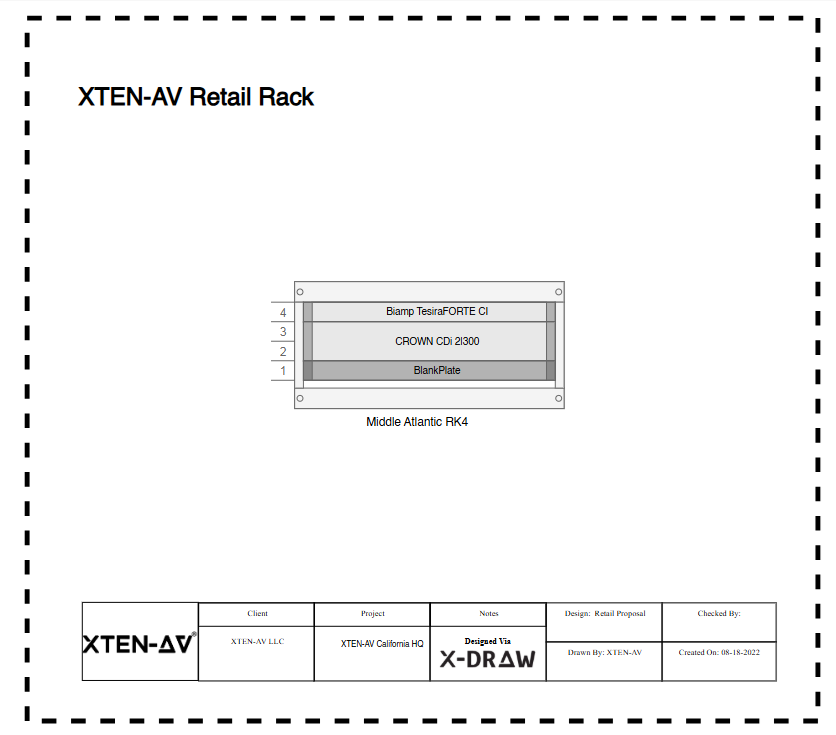
One of the most practical tools available to manufacturers today is free rack diagram software. Rack layout is often where compatibility issues surface — space constraints, power requirements, cooling needs, and cable routing all depend on accurate rack elevation planning.
By offering free rack diagram software as part of a broader AV design platform, manufacturers and their integrator partners can:
Instantly visualize how equipment fits into a rack
Identify space or airflow conflicts before installation
Reduce costly field corrections
Provide integrators a no-cost way to test-fit products before purchase decisions
This lowers the barrier to adoption significantly. Integrators are far more likely to specify a manufacturer's product when they can validate its physical fit using accessible, no-cost tools rather than guessing from a spec sheet.
Automating Documentation: BOMs, Schedules, and Technical Reports
Automated Bill of Materials (BOM) Generation
A Bill of Materials is one of the most error-prone documents in AV project delivery. Manual BOM creation frequently introduces mistakes in product names, quantities, and specifications — mistakes that can delay procurement or damage manufacturer credibility.
AV BOM software solves this by auto-generating BOMs directly from the system design, including:
Product names and manufacturer information
Model numbers
Quantities
Pricing details
Technical specifications
For manufacturers, accurate BOM automation means their products are represented correctly in every proposal, reducing procurement errors and strengthening trust with integration partners.
Complete Technical Documentation From a Single Design
Beyond BOMs, manufacturers benefit when a single AV design can generate:
System schematics
Signal flow diagrams
Rack layouts
Cable schedules
Equipment schedules
Design reports
This kind of AV documentation software doesn't just save time — it standardizes how a manufacturer's products appear across every integrator's project, creating a consistent brand and technical experience regardless of who is designing the system.
Building Custom Product Libraries for Manufacturer-Specific Data
Manufacturers with diverse product lines benefit enormously from organized, custom manufacturer product library systems. These libraries maintain:
Product specifications
Custom equipment details
Internal product information
Standardized product data formats
Why does this matter? Because consistency compounds. When product data is standardized and easily accessible, engineering teams work faster, repeatable designs become easier to produce, and frequently-used products stay top-of-mind for design teams building similar systems repeatedly (like classrooms or meeting rooms).
Improving Collaboration Between Manufacturers, Integrators, and Consultants
Successful AV projects depend on tight collaboration between manufacturers, consultants, integrators, and end users. AV collaboration platform technology creates a shared design environment where all stakeholders reference the same system information — eliminating the version-control chaos of emailed PDFs and spreadsheet attachments.
Collaboration benefits include:
Easier design reviews
Better product communication
Improved technical discussions
Faster design approvals
For manufacturers, this means becoming an active participant in the specification process rather than a passive catalog listing — strengthening relationships with integration partners and increasing repeat specification of their products.
Supporting Repeatable Applications With Design Templates
Many manufacturers focus on specific verticals — meeting rooms, training rooms, classrooms, digital signage, or large venue AV. AV design templates allow designers to create reusable system configurations built around a manufacturer's core product line.
This benefits manufacturers by:
Demonstrating recommended applications visually
Making solution design faster for integrator partners
Supporting standardized deployments across multiple sites
Helping partners replicate successful designs at scale
Connecting AV Design Data With Business and Procurement Systems
Modern AV workflow management platforms don't operate in isolation — they integrate with CRM systems, ERP platforms, accounting tools, and procurement systems. This connectivity means product information, sales processes, project planning, and business operations all stay aligned.
For manufacturers, this translates to:
Smoother partner collaboration
Better visibility across active AV projects
Reduced friction between design and fulfillment
AI-Powered Design Assistance: The Next Frontier for Manufacturers
Artificial intelligence is transforming AV engineering software. AI-assisted tools now support:
AI-assisted BOM creation
AI design assistance
AI connection checking
Automated drawing support
Product and design recommendations
For manufacturers, AI-powered platforms mean their products can be recommended intelligently within designs based on compatibility and application — accelerating adoption while reducing the manual burden on integrator teams. This is quickly becoming a defining feature of AI-powered AV software, and manufacturers who align with AI-capable platforms position themselves ahead of competitors still relying on static catalogs.
Supporting the Complete AV Project Lifecycle
The most valuable AV project design software doesn't stop at the drawing board. It supports the entire journey:
Design → Documentation → Proposal → Installation → Service
Manufacturers benefit when their products stay connected throughout this entire lifecycle rather than disappearing after initial specification. This creates long-term value for channel partners and increases the manufacturer's presence across the full project — not just the purchasing decision.
Why XTEN-AV Is the Best AV Software for Manufacturers
Among the platforms available today, AV software for manufacturers built specifically with manufacturer needs in mind stands out — and XTEN-AV has emerged as a leading solution in this category. Here's why:


Real AV System Design Integration — XTEN-AV allows manufacturer products to be
represented inside actual conference room, classroom, auditorium, control room, hospitality, and corporate AV designs — not just isolated spec sheets.
Massive Product Database — With access to 1.5M+ AV products from 5,200+ brands, manufacturers gain visibility alongside the components integrators are already specifying.
X-DRAW for Accurate System Design — XTEN-AV's proprietary drawing tool turns product data into complete line schematics, signal flow diagrams, rack elevations, floor plans, and connection diagrams.
Automated BOM Generation — Eliminates manual entry errors and ensures manufacturer products are represented accurately in every proposal.
Comprehensive Technical Documentation — A single design generates schematics, cable schedules, equipment schedules, and design reports automatically.
Custom Product Libraries — Manufacturers maintain standardized, organized product data across every project.
Strong Collaboration Environment — A shared design space connects manufacturers, consultants, and integrators throughout the specification process.
Reusable Design Templates — Supports repeatable, scalable deployment of common applications like meeting rooms and classrooms.
Business System Integration — Connects with CRM, ERP, accounting, and procurement platforms for seamless operations.
XAVIA AI Assistant — AI-powered BOM creation, design assistance, and connection checking accelerate the entire design process.
Full Project Lifecycle Support — From design concept through installation documentation, XTEN-AV keeps manufacturer products connected at every stage.
These combined capabilities make XTEN-AV one of the most complete AV manufacturing software solutions available, addressing the full spectrum of manufacturer needs — from initial product visibility to long-term partner enablement.
Frequently Asked Questions: AV Manufacturers and Design Software
What is AV software for manufacturers?
AV software for manufacturers refers to platforms that allow AV product manufacturers to integrate their equipment data into system design workflows — including schematics, rack layouts, BOMs, and technical documentation used by integrators and consultants.
How does AV design software help manufacturers increase product adoption?
By making products visible and easily selectable within real system designs, AV design software removes friction from the specification process. Integrators are more likely to choose products they can easily visualize, verify compatibility for, and document accurately.
Why do manufacturers need AV documentation software?
Manual documentation is error-prone and time-consuming. AV documentation software automates BOMs, cable schedules, and equipment schedules directly from system designs, ensuring accuracy and consistency across every project that uses the manufacturer's products.
What is free rack diagram software used for?
Free rack diagram software allows manufacturers and integrators to visualize how equipment fits within a rack — checking space, airflow, and cabling requirements before installation, without upfront software costs.
How do manufacturer product libraries improve design accuracy?
A manufacturer product library centralizes accurate, standardized product data so designers don't rely on manual entry. This reduces specification errors and ensures consistent representation of a manufacturer's product line across every AV project.
Can AI improve AV product integration for manufacturers?
Yes. AI-powered AV software tools like XAVIA assist with BOM creation, connection checking, and design recommendations — helping integrators specify manufacturer products faster and more accurately.
What's the difference between traditional CAD tools and AV-specific design software?
Traditional CAD tools like AutoCAD or Visio aren't built specifically for AV workflows. AV system design software includes AV-specific features like signal flow diagrams, rack elevations, automated BOMs, and manufacturer product databases — purpose-built for AV professionals rather than general drafting.
How does AV software support collaboration between manufacturers and integrators?
Modern AV collaboration platforms provide a shared design environment where manufacturers, consultants, and integrators can review the same system information in real time — improving communication, speeding approvals, and strengthening long-term partnerships.
Case Study Examples: Manufacturer Product Integration in Practice
Case Study 1: Conference Room Equipment Manufacturer A mid-sized manufacturer of conferencing displays struggled with inconsistent representation across integrator proposals — some quoted incorrect models, others omitted required accessories. After integrating their catalog into a centralized AV product database, integrators began pulling accurate specs directly into designs, reducing quoting errors and increasing correct product specification across regional integrator partners.
Case Study 2: DSP and Audio Processing Manufacturer An audio processing manufacturer found that integrators frequently substituted competitor products during the rack planning phase due to unclear physical dimensions. By making rack elevation data available through free rack diagram software, integrators could instantly verify fit and compatibility, leading to increased specification rates for large-scale auditorium and control room projects.
Case Study 3: Control System OEM A control systems OEM needed better visibility during the design phase of complex corporate AV deployments. By supporting reusable design templates for common meeting room configurations, their integration partners were able to replicate successful deployments across multiple client sites, significantly reducing design time per project while maintaining consistent product specification.
Conclusion
AV manufacturers who want to remain competitive can no longer rely solely on product quality and pricing. The real differentiator today is how seamlessly a manufacturer's products integrate into the design, documentation, and collaboration workflows that integrators depend on every day.
Investing in robust AV software for manufacturers — one that offers real system design integration, comprehensive product databases, automated BOM generation, AI-powered assistance, and accessible tools like free rack diagram software — creates measurable advantages: higher specification rates, reduced procurement errors, stronger integrator relationships, and greater visibility throughout the entire AV project lifecycle.
Platforms like XTEN-AV demonstrate what's possible when manufacturer needs are placed at the center of AV design software development. For manufacturers ready to modernize their product integration strategy, the path forward is clear: connect your products to the design process, not just the sales process — and watch adoption, trust, and long-term partner relationships grow accordingly.


Comments